Middle Fork Of The Salmon (4 Rivers)
Salmon-Challis National Forest
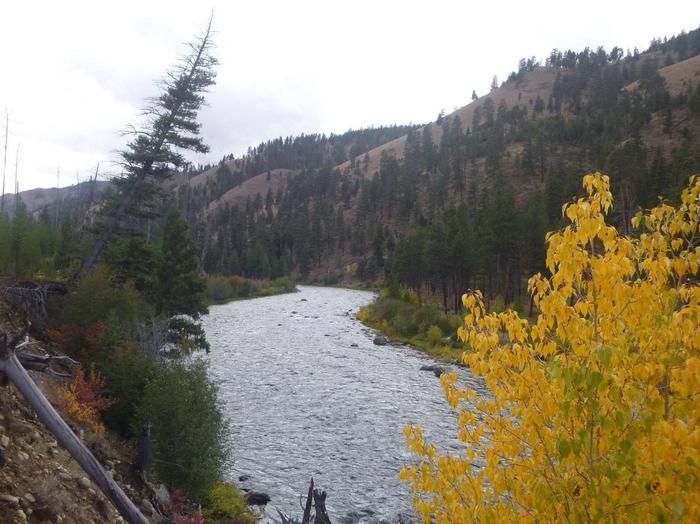
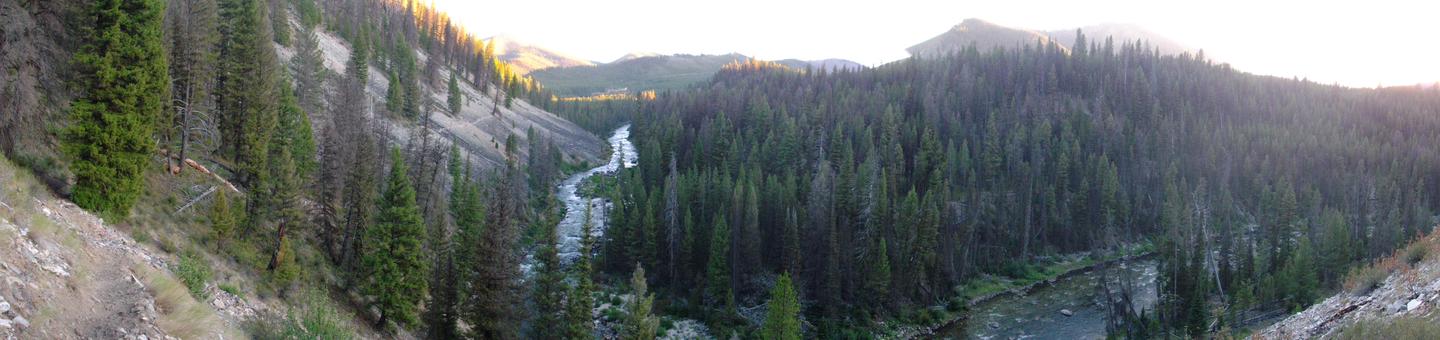
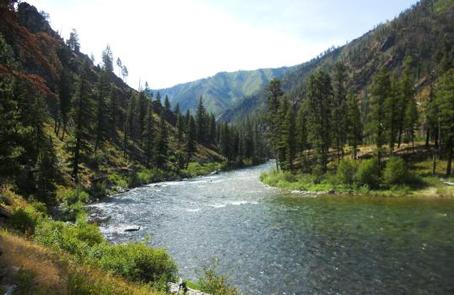
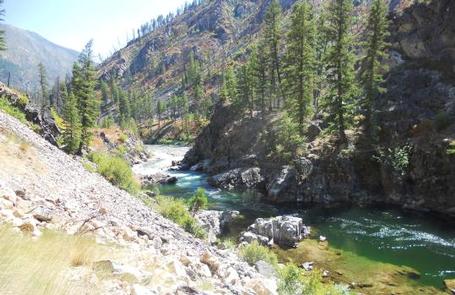
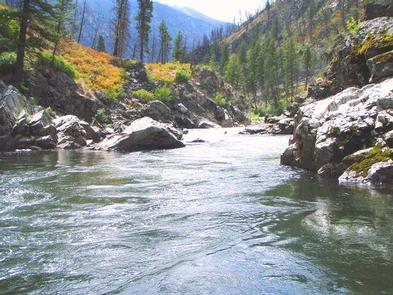
Welcome to the remote and rugged mountains and rivers of Central Idaho, where over 10,000 people float the Middle Fork of the Salmon River each year. The 104 mile-long stretch of river flows through the heart of the Frank Church - River of No Return Wilderness and is one of the original eight rivers in the nation designated as Wild and Scenic on October 2, 1968.
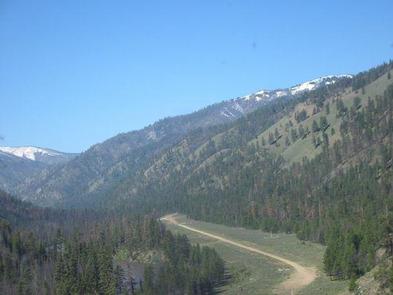
The Middle Fork originates 20 miles northwest of Stanley, ID, at the intersection of Bear Valley and Marsh Creeks, and is known world-wide for extraordinary whitewater float trips. A multitude of class III and IV rapids offer boating excitement and challenge as part of a non-motorized floating experience with many technical runs. This multi-day float trip offers a wide sampling of scenic beauty along the banks, including alpine forests, high mountain deserts and a sheer, rock-walled canyon —the third deepest in North America!
Beyond rafting, the area offers natural hot springs, prime fly fishing (catch-and-release only), scenic wilderness hikes with glimpses of prehistoric paintings and abandoned settler cabins, dazzling night skies, and geologic evidence of the river’s continuing efforts to carve its way through the Idaho Batholith.
The Middle Fork employs a permit system to protect the river and wilderness resources from excessive human impacts. As part of that protection plan, we ask you to learn and practice “Leave No Trace” ethics. Because of the remote location, man's presence in the area was somewhat limited, leaving it in the condition we see today. In fact, there are a small number of trails, landing strips, private ranches and Forest Service stations that serve as evidence of man's intrusion. If you choose to hike from one of the river campsites, you may even be lucky enough to catch a glimpse of how past inhabitants lived.
Notifications and Alerts
Boundary Creek and Indian Creek are closed. NO POTABLE WATER
Late/Early season boaters must obtain their float permit from the River Office before launching. First, update your reservation details, then email the Middle Fork office at sm.fs.middlefork@usda.gov or leave a message at (208) 481-2625 at least five work days prior to launching to obtain your permit. Your permit will be prepared and emailed to you. Once you receive your permit, sign where indicated, then return a copy before departing for your float trip. Print and carry the permit with you on the river.
Newland SCAT machine and facilities are closed for the season.
Permit & Season Information
A float permit is required year-round to be on the waters of the Middle Fork of the Salmon River between Dagger Falls and the river's confluence with the Main Salmon. Booking a reservation here allows the individual to obtain a permit from the Forest Service to float this river. The launch date is the first day that watercraft should hit the permitted stretch of the river.
The lottery control season extends from May 28 - September 3.
Big Creek floaters are required to obtain a Tributary Permit from the McCall District Office, but they are not required to obtain a Middle Fork permit if they will float all the way out in one day. Big Creek is closed to floating from April 1 – May 31 and from August 1 – September 30.
Need to Know
Launch dates are NOT transferable. Alternate trip leaders are NOT assigned. Reservations MUST be cancelled if the permit will not be used. The Forest Service strictly adheres to the Cancellation and No-Show policy described under the Fees & Cancellations section of this website.
Scheduled infrastructure maintenance will affect access to and from the river in 2024. Delays and closures should be expected. Refer to the Notifications Banner for details. Choose your launch date accordingly.
The permit holder must at least 18 years old by the launch date.
Only one application can be submitted for this river’s lottery.
Reservations cannot be held by individuals being penalized for violating the cancellation policy.
Reservations will be revoked if an individual submits duplicate applications or is being penalized for violating the cancellation policy.
The permit holder will be the responsible person for the group and must accompany the group at all times while on the river.
Group size determines trip length on the permitted stretch from Dagger Falls to the Confluence (regardless of launch location) during the Lottery Control Season (May 28 - September3):
- 1 to 10 People - up to 8 Days (7 nights)
- 11 to 20 People - up to 7 Days (6 nights)
- 21 to 24 People - up to 6 Days (5 nights)
Outside the Lottery Control Season, the maximum group size is 24 and the maximum trip length is 8 days.
The reservation holder will provide a complete passenger list.
This reservation is for a non-commercial permit unless the reservation holder is authorized as a commercial operator on the Middle Fork.
A maximum of 12 watercraft is allowed per permit for August 8 through September 15 launches to minimize impacts on spawning Chinook salmon.
Groups must camp in the assigned camps listed on the permit. All group members must camp together. Although assigned to boating parties, this does not imply exclusive use. Groups may need to share camps with other Forest users. See the Campsite Selection webpage for details.
Each group will carry and use the following required equipment (click here for more details):
- Portable toilet
- Fire pan
- Fire blanket
- Ash container
- Shovel
- Bucket
- Mesh strainer
All watercraft will be clean, drained, and dry upon arrival at the launch site. Each boat will have an appropriate Idaho Aquatic Invasive Species (AIS) sticker (more details here).
All watercraft must be inspected by Forest Service staff prior to going into the river.
Groups will pick up all garbage, including foil, plastic bottles, cans, cigarette butts, micro-trash, ashes, and human waste, and carry it out to a provided dump site and/or recycling station.
Soap, not even biodegradable soap, will not be used in any stream, river, lake, or hot springs.
All archeological artifacts and natural features will be left intact.
Groups will observe all local, state and Federal laws and regulations.
Public nudity is prohibited.
A signed hard-copy permit must be obtained from the Forest Service before launching. If Boundary Creek is not staffed, boaters must stop at Indian Creek to pick up permit. If neither is staffed, contact the River Office at sm.fs.middlefork@usda.gov to obtain the permit at least a week prior to launch date.
Groups will carry and display their permit upon the request of any Forest Officer.
The Middle Fork of the Salmon River runs through the Frank Church - River of No Return Wilderness. Mechanical transport and motorized equipment are not allowed in Wilderness Areas. This includes bicycles, carts, and boat motors. The use of Drones (Unmanned Aircraft Systems or UAS) is not allowed within Wilderness Areas. To learn more, see the USDA Forest Service’s Recreational Drone Tips , and visit Unmanned Aircraft Systems on the FAA’s site.
Fee Policy
Reservation or Lottery Application Fee: $6.00. This fee is non-refundable.
Special Recreation Fee: All persons floating the Middle Fork of the Salmon will pay $4.00 per person per day, or have a valid Salmon Rivers Season Pass (local pass).
See Discount Pass Policies for information about Salmon Rivers Season Pass and Interagency Senior/Access Passes.
Cancellation Policy
The reservation is non-transferable. If you cannot go on your reserved launch date, you must cancel it.
If your launch date is in the control season (May 28 – Sep 3), failure to cancel by 11:59 PM Mountain Time 21 days prior to your launch date will trigger a Late Cancellation Penalty, which restricts you from holding a permit on this river for three years. To calculate the 21 days , start counting backwards, where the day before is one day prior and so on, e.g., if launch date is June 22, cancellation must occur by 11:59 PM of June 1.
Outside of control season, you must cancel at least three days prior to your launch.
Exceptions: When water levels exceed 5.0 feet, if the road to Boundary Creek is not open, or if your control season launch is within 21 days of when you reserve it, the reservation can be cancelled three days prior to your launch date without a late penalty, but it must be cancelled to avoid a No-Show penalty.
The $6.00 reservation fee is non-refundable.
Contact Information
Mailing Address
1206 S. Challis St Salmon ID 83467
Phone Number
208-481-2625