Garden Key Campground
Garden Key Campground
Part of Dry Tortugas National Park
Overview
Camping at Garden Key is an incredible experience with amazing star gazing, snorkeling, sunsets, and more! But you must be prepared to camp in this remote location. To assist you in your planning, be sure to review the information on this page to learn more about camping at Dry Tortugas National Park.
Camping transportation is limited to private vessel, permitted tour guides, or commercial ferry. Reservations on the Yankee Freedom ferry are limited and sell out months in advance. Once you arrive at Garden Key, camping is first come, first served for all regular sites (up to 6 people). All camping fees are paid on Garden Key and all LARGE groups of 10-20 require an advance reservation with the Park.
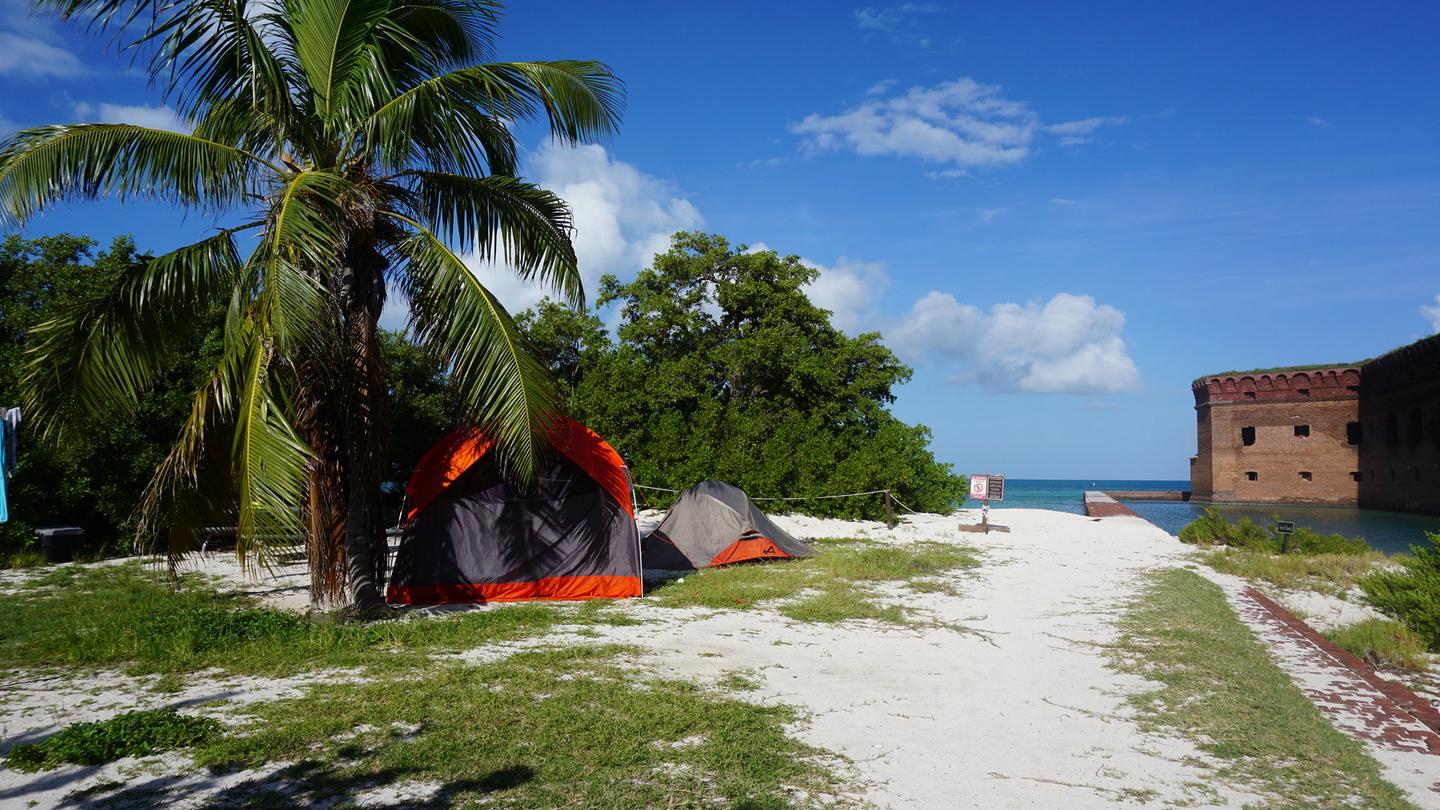
A primitive campground is located on Garden Key and is a short walk from the public dock.
Reservations are not accepted for the 6-person sites. All campers, once they arrive, will be guaranteed a place to camp.
The individual sites can each accommodate up to three 2-person tents (total of 6 people), and are available on a first-come, first-served basis.
When you arrive:
Look for a table in the campground with a stenciled number. Only those tables with numbers are assigned to campsites.
If all regular sites are occupied:
Should you find all eight regular sites occupied, you must share the overflow area with other campers. The overflow area is a grassy area near the regular campsites.
Tables and grills are provided in overflow sites, but they must be shared with other overflow campers. As campers leave, you may move to a regular site if one becomes available.
Campers Supply Checklist
Food and Water: We recommend two gallons of water per person per day (remember the heat). Bring an extra day's supply of food and water in case of ferry cancellations. Bring food items in hard-sided containers for protection from rats and crabs. Posts are available to hang food and trash.
Shelter: Tent (required), sleeping bag and pad, and strong stakes for the frequent high winds.
Cooking: Match-light charcoal for campground grills (fuel is not permitted aboard ferries), waterproof matches and lighter, cooking utensils, biodegradable soap, and trash bags.
Clothing: Cold and warm-weather clothing, rain gear, lightweight long-sleeve shirt and pants for sun and bug protection, wide-brimmed hat.
Personal Equipment: Medications, first-aid kit, knife, flashlight with spare batteries, snorkel gear, binoculars, sunglasses and sunscreen, insect repellent, and personal items. Private boaters and paddlers require additional safety gear.
Natural Features
The campground is located right outside of Fort Jefferson on the shores of The Gulf of America.
Recreation
The beach adjacent to the campground is only feet away from your campsite. Popular activities include fishing, swimming, exploring the Fort and snorkeling.
Important Notices
Campground Regulations
Space is Limited. Each of the regular campsites contains a table, post for hanging food, and a BBQ grill. Three tents and six campers are the maximum allowed per campsite. All equipment must remain within ten feet of your table.
Protect Park Vegetation. Trees and shrubs are crucial to provide some shade and wind break. Help protect this valuable vegetation. Do not attach anything to campground trees (but clothes line may be strung between posts). All camping gear must be free standing. Respect closed areas of the park.
No Wood Fires. Charcoal briquettes placed in campsite BBQ grills are only fires allowed. Gas camping stoves are permitted by the park, but commercial ferries do not permit them on board.
Toilets. Composting toilets are located in the campground. Waste is composted in the equipment below the units. These systems are very fragile and are designed only for the disposal of human waste and toilet paper. Please do no put trash, food scraps, or other items in these toilets. Please lower toilet lids when not use in use to reduce odor and aid in the composting process.The composting toilets are closed from approximately 10 a.m. to 3 p.m. During these hours, please use the facilities aboard the commercial ferry boats at the dock.
Grey Water. Grey water from dishwashing, etc. should go below the high tide line at the dinghy beach.
Protect Your Food. Rats have inhabited the Tortugas probably since the arrival of humans. Though the size of the rat population is controlled, rats may be encountered as they forage through campsites looking for food. The only reliable way to protect your food and prevent damage to your gear is to store your food and food trash in hard-sided containers. Rats will chew through tents or backpacks if they smell food, and can also climb the provided hanging posts.
Kayaks and Other Watercraft. You may keep boats in your site or on the shore near the designated dinghy beach. Boats of all kinds are prohibited in the swim area. Boats may only be launched from and landed on the designated dinghy beach, which is located near the government docks. Remember to wear a life jacket at all times while boating.
Quiet Hours. Please be considerate of others and observe quiet hours from 10 p.m. to 6 a.m. The use of bright lanterns is also discouraged during these hours.
Access to Fort Jefferson. One of the great pleasures of any visit to the park is the opportunity to explore Fort Jefferson. Be careful inside the fort. Many areas have uneven walking surfaces. The fort is open sunrise to sunset, or to contact a ranger in an after-hours emergency. The moat wall, beaches, and other exterior public area remain open after dark.
Departure
On the day of departure, plan to:
Completely clear your campsite.
Place all camping gear on the main dock.
Return all hand carts to the dock by 10 AM.
If you are traveling with the ferry:
Wait until the ferry off-loads passengers and equipment the morning of your departure.
See the captain for instructions on loading your gear.
If you want to enjoy the island before leaving, be sure to keep any items you will need for the day in the day use area.
Available Activities
- Accessible Swimming - Accessible Swimming
- Snorkeling - Snorkeling
- Fishing - Fishing
- Star Gazing - Star Gazing
Contact Information
Phone: 305-242-7700
Rental Options
Available Campsites
- Site Tent Only 4, Loop Garden Key, Type Walk To
- Site Tent Only 1, Loop Garden Key, Type Walk To
- Site Tent Only 7, Loop Garden Key, Type Walk To
- Site Tent Only 2, Loop Garden Key, Type Walk To
- Site Tent Only 6, Loop Garden Key, Type Walk To
- Site Tent Only 3, Loop Garden Key, Type Walk To
- Site Tent Only, Loop Garden Key, Type Walk To
- Site Tent Only 5, Loop Garden Key, Type Walk To
- Site Tent Only 8, Loop Garden Key, Type Walk To