Copper Ridge Dinosaur Tracks Interpretive Site
Near Moab, Utah
Copper Ridge Dinosaur Tracks Interpretive Site does not offer reservations through Recreation.gov. Please take a look at the area details below for more information about visiting this location. Enjoy your visit!
Overview
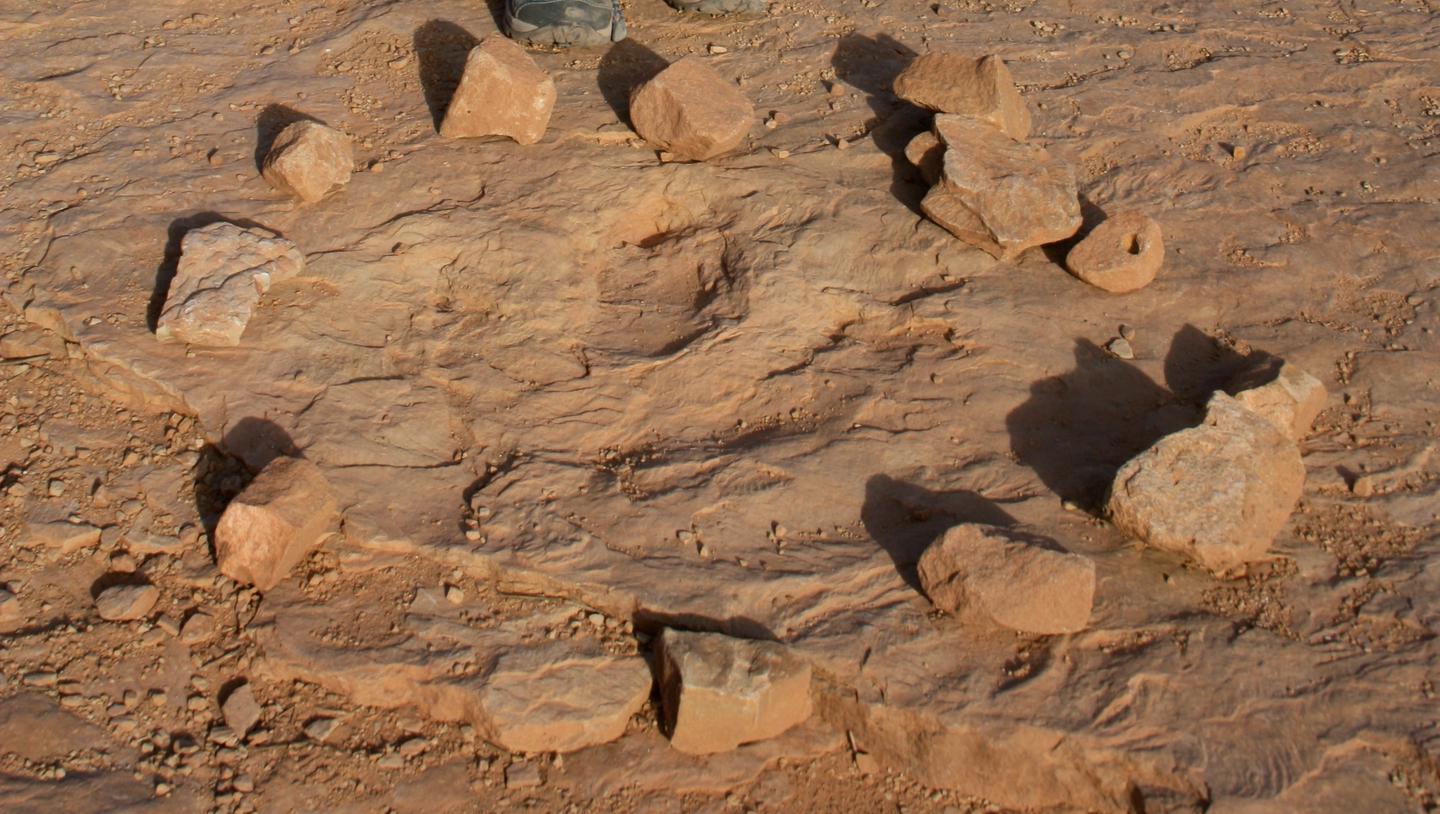
Located just north of Moab, Utah, Copper Ridge Dinosaur Tracks Interpretive Site offers a rare chance to see authentic Jurassic-era footprints preserved in the desert. A short, easy-to-moderate hike of about 0.3 miles round trip with 65–100 feet of elevation gain leads to tracks left by both giant plant-eating sauropods and meat-eating theropods. Sweeping desert views and well-preserved tracks make this family-friendly destination ideal for photography and exploration.
The Copper Ridge tracks are preserved in sandstone of the Salt Wash Member of the Morrison Formation, an ancient river channel where ripple marks can still be seen today. These impressions date back to the Late Jurassic period, approximately 155 to 149 million years ago, when giant dinosaurs roamed what is now eastern Utah. Discovered in 1989 by Linda-Dale Jennings-Lockley, Copper Ridge includes the first sauropod tracks scientifically documented in Utah.
Visitors can see large, round sauropod footprints — likely from Camarasaurus, Apatosaurus, or Diplodocus — alongside three-toed theropod prints from predators such as Allosaurus. Notable features include a sauropod trackway showing a sharp right turn and a theropod trackway that suggests the animal may have been limping, offering rare insight into dinosaur movement and behavior. Interpretive signage explains the fossils and the environment that preserved them, emphasizing the importance of protecting these fragile remnants from the past.
Hours and Seasons
Open year-round. Summer temperatures can be extreme with no shade; plan visits for early morning or evening.
Features and Services
- Access and parking: A small gravel parking area is available near the trailhead, providing easy access for most passenger vehicles. There are no length or height restrictions, and standard clearance is sufficient for the approach. The road is generally passable in dry conditions, with four-wheel drive recommended only during wet or muddy weather.
- Cell service: Cell service is limited; visitors should not rely on having a dependable signal.
- Toilets: A vault toilet is available at the trailhead.
- Drinking Water: No water is available on-site; please bring your own.
- Pets: Pets are allowed on leash. Please keep them off the dinosaur tracks to prevent damage. Pick up and pack out any pet waste.
- Camping: Overnight camping is prohibited at the trailhead and tracksite. Visit Moab Information Center for nearby public and private camping options.
- Nearby Attractions and Amenities: The town of Moab offers food, gas, lodging, and medical facilities. Recreational opportunities abound — visit the Moab Information Center webpage and facility for details.
Respect and Protect
Dinosaur tracks and bones are amazing to experience. You may look and gently touch but remember, these fossils are very fragile and irreplaceable, so, avoid walking on, scraping, or marking them. Please stay on the trail and leave the fossils in place for future visitors to enjoy. By practicing responsible outdoor ethics, you help ensure future visitors can enjoy this remarkable site.