Desolation Wilderness Permit
Desolation Wilderness is open for overnight and day use. Visitors should use caution when travelling through areas burned in the Caldor Fire and be aware of dead and fire-weakened trees and other hazards present in the recently burned landscape.
Use this Desolation trip planning guide (PDF) to make the most of your visit and learn more about the permitting system, trail conditions and Desolation wilderness stewardship opportunities.
Visitors must obtain a Wilderness permit for overnight camping as well as day visits, year-round. A quota system is in place for the 45 overnight destination zones from the Friday before Memorial Day through September 30th each year. The system disperses visitors throughout the area, providing an opportunity for solitude and reflection. Overnight permits are available for reservation six months in advance. A recreation fee is assessed during the permitting process. Day use permits are free of charge.
Campfires are not allowed within the area. Camp stoves are permissible.
Maximum group size is 12 people who will be together at any given time during the trip.
BEAR CANISTER REQUIRED. Overnight Wilderness Visitors must store all food and scented items in a hard-sided bear-resistant canister. Up to $5000 fine for non-compliance as per 36 CFR 261.58 (cc).
A signed permit must be carried at all times by the group leader. A digital or paper permit reservation confirmation is not a valid permit.
When selecting a campsite choose a durable surfaces at least 100 feet from water and trails.
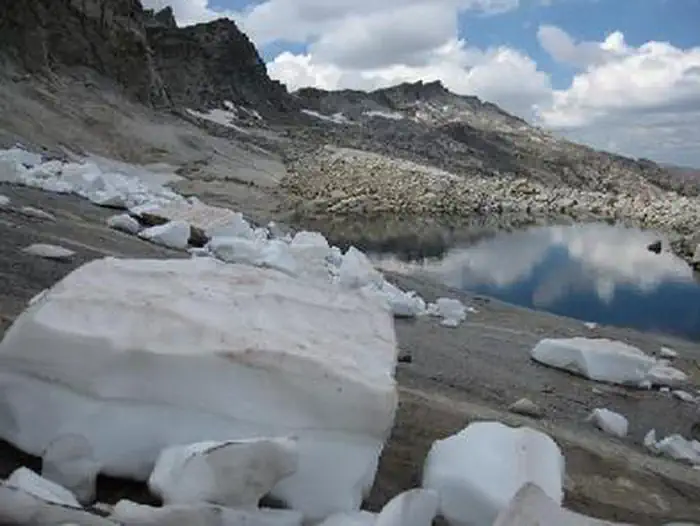
Heavy snow may start as early as October and may persist through July.
Desolation Wilderness is accessed through 13 trailheads: Loon Lake, Van Vleck, Rockbound, Twin Lakes, Lyons Creek, Pyramid Creek, Ralston Peak, Echo Lake, Glen Alpine, Mt. Tallac, Bayview, Eagle Lake and Meeks Bay. During the winter months, most of the trailheads are covered by snow and are not accessible by vehicle. Contact a local U.S. Forest Service office for current conditions.
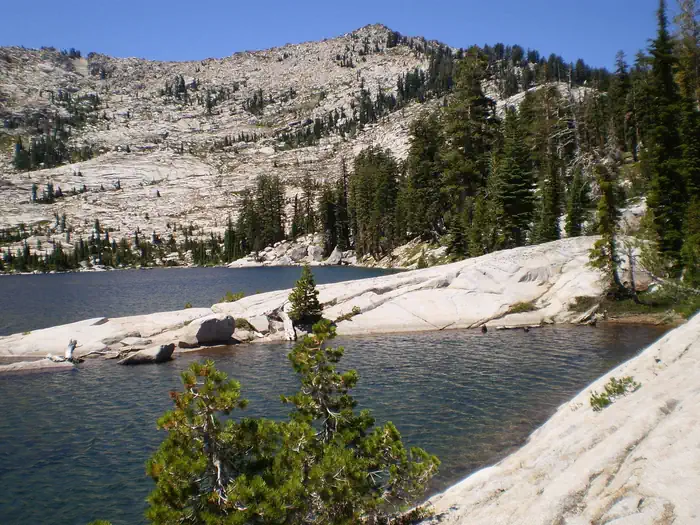
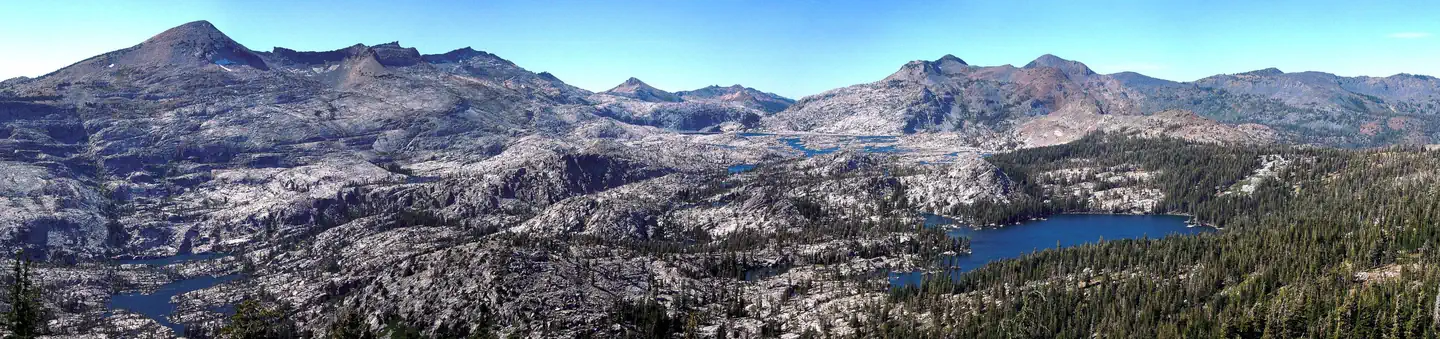
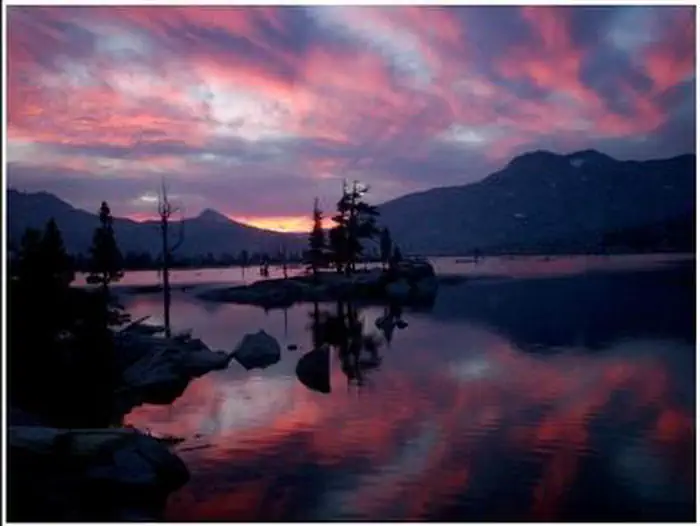
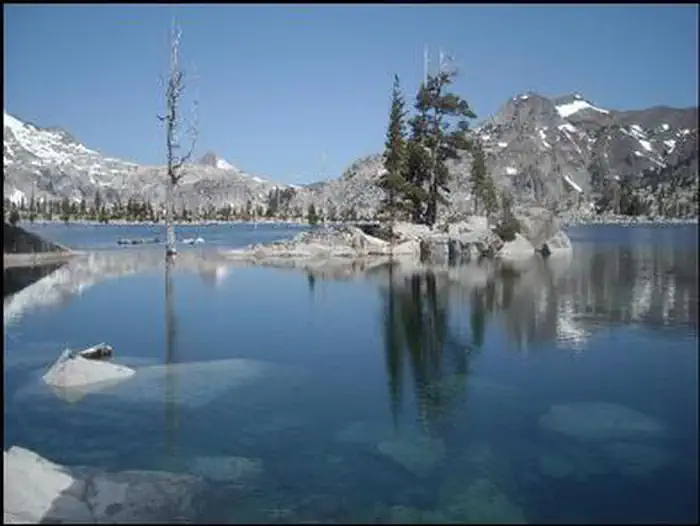
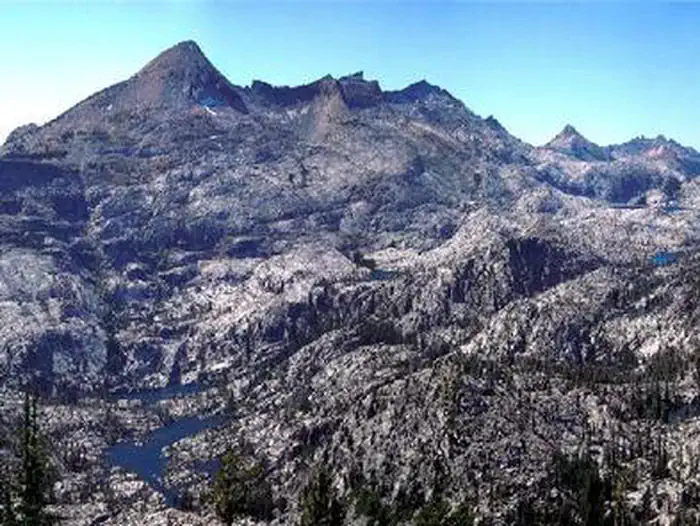
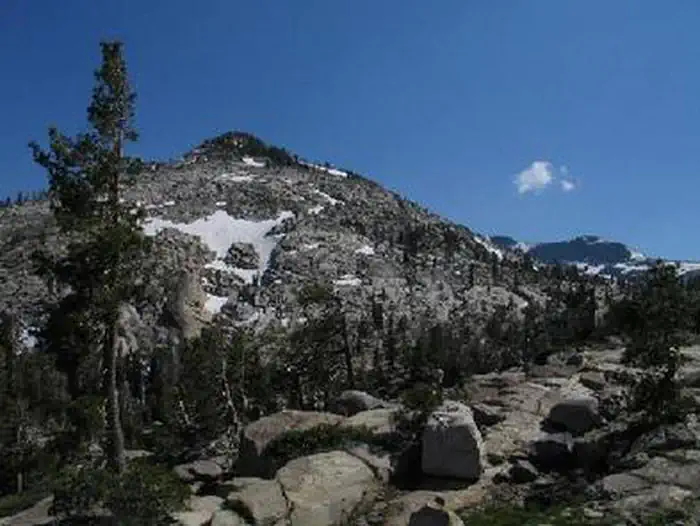
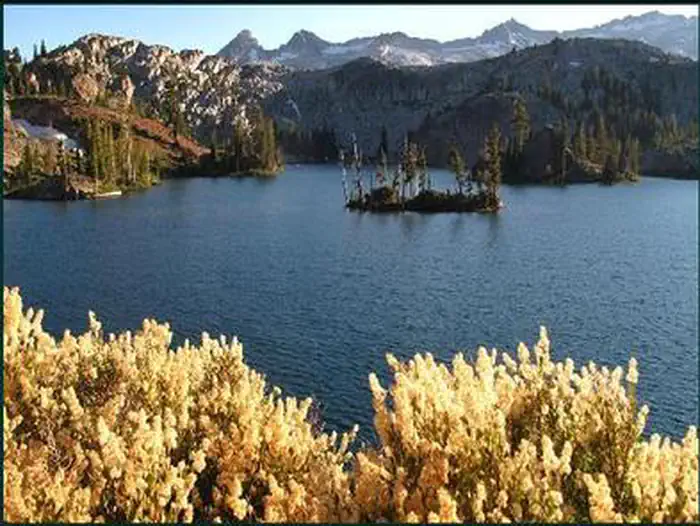
Long recognized for its many lakes surrounded by glacial carved granite basins, Desolation Valley Primitive Area was established in 1931 and became a congressionally designated wilderness area in 1969. Desolation Wilderness is located west of Lake Tahoe and north of Highway 50 in California. It straddles the crest of the Sierra Nevada range, encompassing 63,690 acres, and has elevations ranging from 6,500 feet to nearly 10,000 feet. Pyramid Peak as the highest point, topping out at 9,987 feet. Horsetail Falls, which tumbles in stages for nearly 500 feet, is just one of the area's many waterfalls. The Pacific Crest National Scenic Trail traverses 17 miles through Desolation Wilderness, from Echo Lakes to the south to Richardson Lake just past the northern boundary. The Tahoe Rim Trail also travels through Desolation. While summertime draws the most visitors, during the winter, the area is a popular playground for experienced backcountry skiers and snowshoers.
Notifications and Alerts
Starting on September 9th 2026 and continuing for two weeks the Twin Lakes TH parking lot will be closed due to the repaving of the access road. Do not park in the lot beyond September 8th. Be prepared to use detours or alternate routes such as starting at the Rockbound TH. Please use caution while traveling through the Wrights Lake area as construction operations and heavy equipment will be present.
Permit & Season Information
Overnight Permits:
- Permits are required all year round and allow an individual or group (of up to 12) travelling & camping together to stay in this Wilderness.
- Permits are limited in quantity from Friday of Memorial Day weekend to the end of September.
- The quota is based on 45 Destination Zones. You must stay your first night in the Zone you select for your permit. After your first night, you may change locations for subsequent nights of your visit using the same permit, as long as you exit by the last date booked for your trip.
- Permits can be reserved up to six months in advance of your day of entry.
- Outside of the limited quota season, permits can be booked and printed on the day of entry.
- Within the limited quota season, your permit can be printed starting seven days in advance and up to the day of entry.
- You must have a printed copy of your permit with you at all times.
Day Use Permit:
Obtain a free permit from a local Forest Service office , or at trailheads in the summer.
Need to Know
Desolation Wilderness Guidelines
To protect fragile ecosystems and reduce environmental impacts, follow the visitor use guidelines below and this additional trip planning information.
Permits
- Valid permit is required for day and overnight visits year-round.
- Enter Desolation Wilderness on the reserved permit start date.
- During the quota season, you must stay your first night within the destination zone on your permit.
- Permit is not valid until signed.
- Carry permit with you and present it upon request to a Forest Officer.
- Your permit reservation confirmation is not a valid permit. Digital permit will be temporarily accepted during COVID-19.
Campfires
- Campfires are prohibited.
- Camp stoves are permissible.
Quota
- A quota limits the number of visitors to Desolation Wilderness between the Friday before Memorial Day to September 30th each year.
- There are 45 destination zones designated with a maximum quota for the first night stay in each zone during the quota season.
- During the off-quota season there is no limit to the number of overnight users in each zone (maximum group size still applies).
Group Size
- Twelve people is the maximum group size allowed together at any time in Desolation Wilderness.
- Many destination zones have quota less than the maximum group size.
Camping
- Camp at least 100’ from lakeshore, stream or trail.
- There are camping restrictions for Special Management Areas to reduce impacts at popular lakes.
- The maximum stay is 14 days.
Special Management Areas
- Eagle Lake, Grouse and Hemlock Lakes, and the north and east side of Lake of the Woods, have designated campsites.
- The designated campsites are marked with a tent symbol on a 4x4 post.
- Camp within 30' of the marked post.
- Only one permitted group is allowed at a designated site.
- If designated campsites are taken when you arrive at your destination, locate your camp at least 500' from the lakeshore.
- Restoration sites have been established to allow damaged shorelines and meadows a chance to recover from overuse. Respect these sites and walk a different path!
Waste
- Human and dog waste must be disposed of 200’ from water or trail in a cat hole 6-8 inches deep or packed out.
- Pack out your toilet paper.
- Practice Leave No Trace and pack out everything you pack in.
- Washing with soap, including biodegradable soap, in a stream, lake or any other water source is prohibited.
- Clean your cookware 200' from water sources.
Bears and Food Storage
- Protect yourself by using food storage canisters for all food and toiletries. Bears have become more active.
- Hard sided bear proof food storage containers are required and may be available for rental. Contact the Forest Service permit offices for information.
Pets
- Dogs must be under control at all times. Dogs impact wildlife and barking intrudes on the experience of others.
- El Dorado County has a mandatory leash law.
- Bury or pack out your dog waste.
Natural Features
- Damaging or removing any natural feature is prohibited.
- Photograph your finds, leave them behind for others to enjoy.
Livestock
- Limited to two livestock per person and 12 livestock in one group.
- Do not hitch, tether or hobble a horse or other saddle or pack animal within 200’ of a water source or within 100’ of a campsite.
- Do not tie stock directly to trees except for loading, unloading or short rest breaks while traveling.
- Use approved weed free forage.
- Some trails are not recommended for stock use. Plan your trip carefully.
Other Considerations
- Treat all water by boiling, using purification tablets or filtering.
- State fish and game laws apply.
- Discharging a firearm is prohibited within 150 yards of a campsite, occupied area, or in any manner or location that places people or property at risk of injury.
Commercial Use
- Commercial use may be prohibited in wilderness and/or requires a special use permit. If you are charging a fee for leading a group into the wilderness, this is considered outfitting and guiding and requires a special use permit. Contact a Forest Service office for more information.
Fee Policy
Reservation Fee: A $6.00 non-refundable reservation fee is required for each overnight permit reserved.
Overnight Recreation Fee: There is a per person fee for a Desolation Wilderness Overnight Permit. Fees are charged as follows:
Adult (over 12 years in age): $5 per person for the 1st night; $10 for 2-14 nights
Child (12 years and younger): Free
Desolation Annual Pass Holder: Free. However, the $6/permit reservation fee still applies.
Parking: Pyramid Creek, Eagle Falls, Loon Lake, Rockbound, and Twin Lakes Day Use Areas have a day use fee, which is waived for overnight permit holders. Overnight permit holders must display parking pass in vehicle.
The maximum charge for recreation fees is $100 per permit.
Cancellation Policy
Cancellations:
Cancel at least eight days prior to entry date: all recreation fees will be refunded.
Cancel seven days or less prior to the entry date: none of the fees will be refunded.
The $6.00 reservation fee is non-refundable for all reservations.
Change Policy:
Changes to your permit are allowed if they are made greater than eight days before your date of entry. Once your permit is available to print, no changes will be allowed (refer to cancellation policy).
Change in the number of people, number of days, or the first night destination zone: log onto the website or contact the call center to make changes. A $5 change fee will apply (if you are increasing your party size, additional use fees will apply).
Changing the date of entry: cancel your current permit and reserve a new permit. A $6.00 reservation fee will apply to the new permit reservation.
Contact Information
Mailing Address
4260 Eight Mile Road Camino CA 95709
Mailing Address
35 College Drive South Lake Tahoe CA 96150
Phone Number
530-647-5415 or 530-543-2600