Death Valley National Park Wilderness Permits
Death Valley National Park contains the largest wilderness in the contiguous United States (over 3,190,400 acres or roughly 93% of the entire National Park!). Nearly a thousand miles of paved and dirt roads intersect the wilderness, providing ready access to all but the most remote locations.
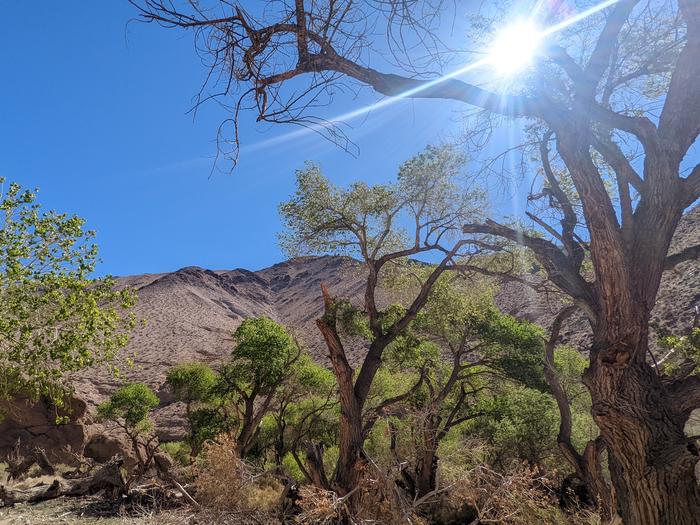
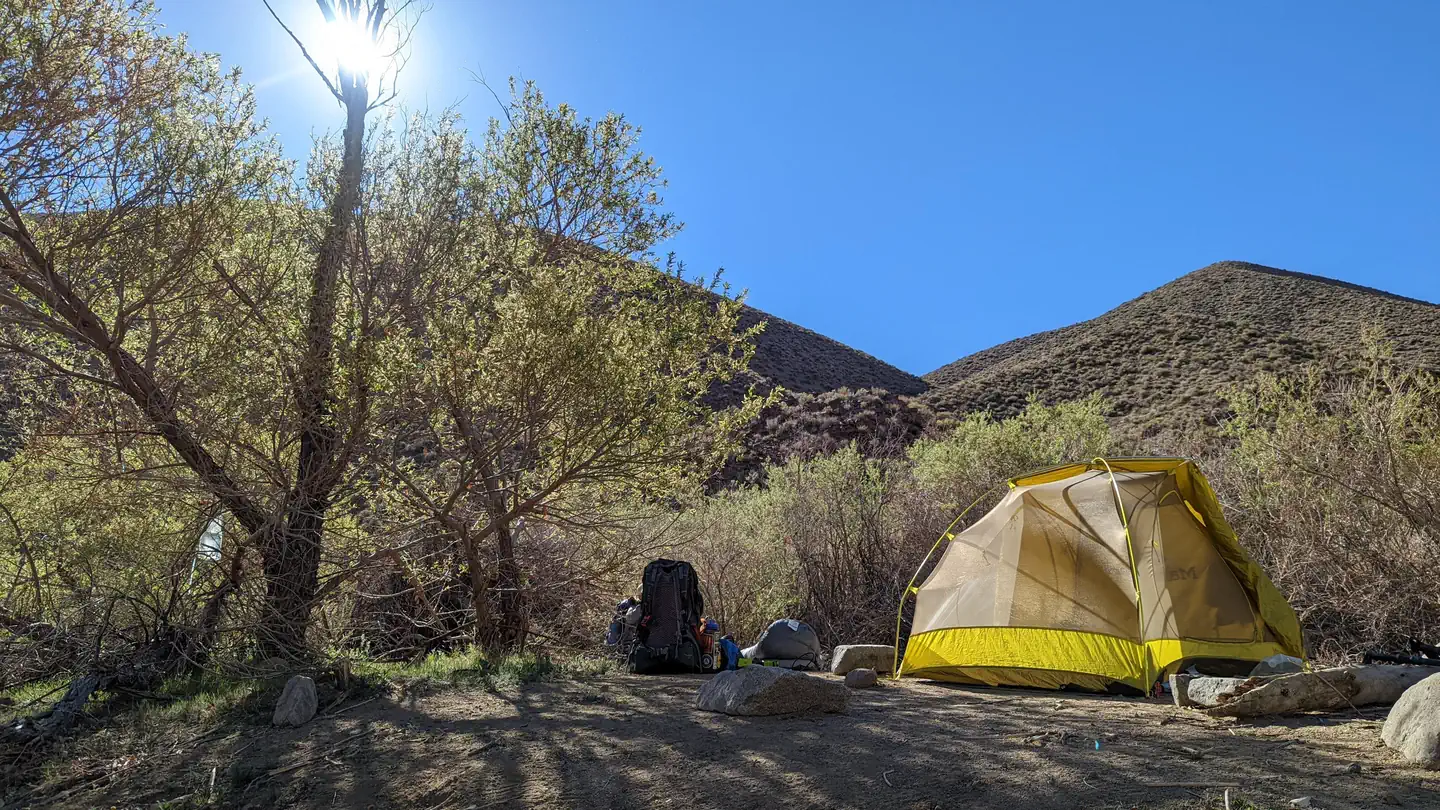
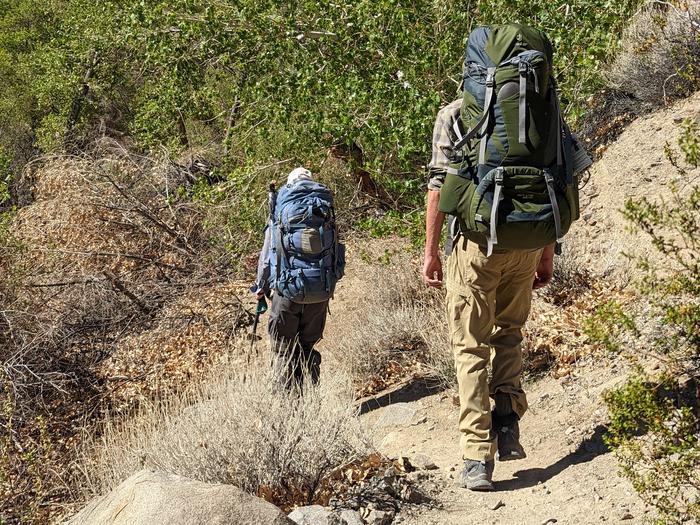
Backpacking in Death Valley National can be challenging, but the opportunities for experiencing solitude, sweeping vistas, dark night skies, and awesome geology abound within the three million acres of designated wilderness in the park. There are few established trails in the park, but hikers can follow canyon bottoms, open desert washes, alluvial fans, and abandoned dirt roads to get around.
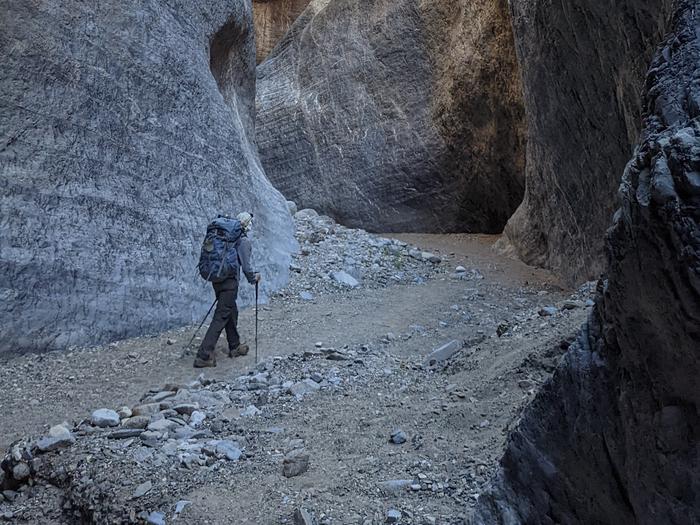
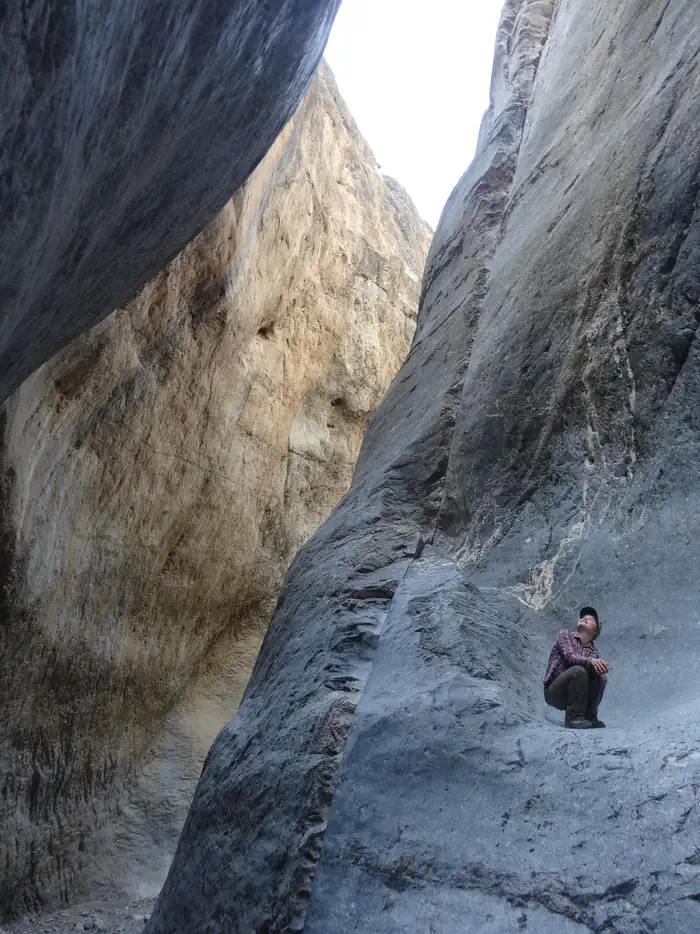
The Cottonwood-Marble Canyon Hiking Loop boasts numerous seasonal water sources and dramatic canyon narrows, making this trail the most popular backpacking route within Death Valley National Park. Most backpackers will park at the intersection of Cottonwood and Marble Canyon Roads and then hike the loop clockwise or counterclockwise, completing the trip in two to three nights.
Notifications and Alerts
Heat Warning: Death Valley National Park is known for its extreme summer heat. Camping is not recommended during this time, as daytime temperatures can average at least 100°F (38°C) with little relief from cooler overnight temperatures. Be aware of these extremes, take necessary precautions, and camp at your own risk.
Permit & Season Information
In order to preserve the premier wilderness access Death Valley National Park offers, a wilderness permit is required year-round for all overnight stays in the Cottonwood-Marble Canyon Hiking Loop within Death Valley National Park.
- All wilderness permits will be available for advance reservations six months prior to the trip start date on Recreation.gov.
- Online same day permits will be available through Recreation.gov until 11:59pm on the day of departure. Although in-person permits will no longer be available for this location, visitors will be able to get assistance acquiring permits from park staff at the Furnace Creek Visitor Center (open 8a – 5p daily) or at the Stovepipe Wells Ranger Station (open intermittently).
- This permit allows the permit holder and their groups (no more than 12 people total) backpacking access to the Cottonwood-Marble Canyon Hiking Loop.
- This permit is valid only for the dates, location, and party size indicated.
Visit Plan Your Visit for more information.
Need to Know
It is the responsibility of all trip participants to understand and obey all park rules and regulations.
Wilderness travel in Death Valley National Park is inherently dangerous and users assume complete responsibility for their own safety. There is little to no cell reception in most areas of the park and rescue is not a certainty. Plan ahead and be prepared
Permit holders are required to carry a digital or printed copy of their permit at all times during their trip.
In addition to your reservation fee, you are required to pay a park entrance fee. See Death Valley National Park’s Fees and Passes page for information on rates and qualifying passes. Entrance fee/pass must be verified by park staff at the Furnace Creek Visitor Center or the Stovepipe Wells Ranger Station.
Leave No Trace guidelines should be followed to minimize impacts on the fragile desert environment.
Pack out all trash and left-over food.
Bury all human waste at least six inches deep and 200 feet from water. Do not leave used toilet paper or expose human waste in wilderness.
Death Valley National Park is within a dynamic environment where natural events occur and conditions can be unpredictable. There is a possibility that this route may close in the event that roads to these canyons are inaccessible. It is the responsibility of the permit holder to remain aware of current park conditions.
Planning
Plan your trip thoroughly. Consider how many miles you want to hike each day, how much elevation gain you are willing to undertake, and the totality of the experience and skill of all members of your group.
Although permitting is available year-round, temperatures frequently range above 100F (38C) May through September. Prepare appropriately.
Utilizing trip planning resources such as guidebooks and maps is strongly encouraged.
During check out, the entry/exit selections are intended to indicate the direction of travel for the loop, i.e. Cottonwood to Marble indicates clockwise travel. These are not the zones in which you intend to camp.
Once your reservation is confirmed through Recreation.gov, you will receive a confirmation email with your trip details. Based on staff availability, you may receive follow-up communication about your reservation.
Vehicle Requirements
High clearance and 4x4 vehicles are required for most travel on Cottonwood and Marble Canyon Roads.
Flat tires are common consequences of rough road conditions or having unsuitable tires. Make sure your vehicle is equipped with "off-road" tires rather than highway or street tires. Carry at least one inflated spare tire (preferably two), a can of tire inflator or a tire plug kit, a 12-volt air-compressor, and a lug wrench. Be sure all parts of your jack are on hand. Know how to use your equipment before you head out.
OHV/ATVs are prohibited from operating on all park roads. All motorized vehicles and drivers must be properly licensed.
Most vehicle rental agreements restrict vehicles to paved roads. Check your contract and be aware that the rental company can charge you for damage to the vehicle obtained while operating outside of contract agreements.
Tow service out of backcountry roads can cost upwards of $1000 or more.
Road Conditions
Cottonwood Marble Road: 10.5mi (17km). The first eight miles (13km) is made up of large swathes of deep sand but typically passable to a 4x4, high clearance vehicle. After the 8-mile point, the road drops steeply into a deep wash pocketed with deep gravel and small boulders for the next 2.1mi (3.4km) to the junction with Marble Canyon Road.
Cottonwood Canyon Road: This 8.5mi (13.7km) road requires a 4x4, high clearance vehicle due to deep sand, rocky washes, tight corners, and small boulders.
Marble Canyon Road: This 1.8mi (2.9km) road requires a 4x4, high clearance vehicle due to small boulders and tight corners through the rocky wash.
Fee Policy
Permit Reservation Fee:
- A $6 non-refundable reservation fee is required for each wilderness permit.
Recreation Fee:
- A $4 per permit recreation use fee is required for each wilderness permit.
Entrance Fee:
- Death Valley charges an entrance fee which you may pay upon arrival or purchase in advance. The park also honors valid annual or lifetime America the Beautiful-the National Parks and Federal Recreational Lands Passes (e.g. Senior, Military, 4th Grade, etc.) also known as interagency passes. For more information visit the park's Fees & Passes web page.
Cancellation Policy
Cancellation Policy:
- Reserved permits may be cancelled at any time prior to your reservation dates.
- If you cancel more than seven days before the permit start date, the $4 reservation use fee may be refunded.
- The $6 reservation fee is non-refundable.
Change Policy:
- You may make changes to your permit itinerary up until your reservation start date. Your permit start date cannot be changed without cancelling the permit and starting over. Once your permit has been issued, you cannot make changes to the permit
Contact Information
Mailing Address
Death Valley National Park P.O. Box 579 Death Valley CA 92328
Email: deva_backcountry_permits@nps.gov
Phone Number
(760) 786-3200