Mount Rainier National Park Wilderness and Climbing Permits
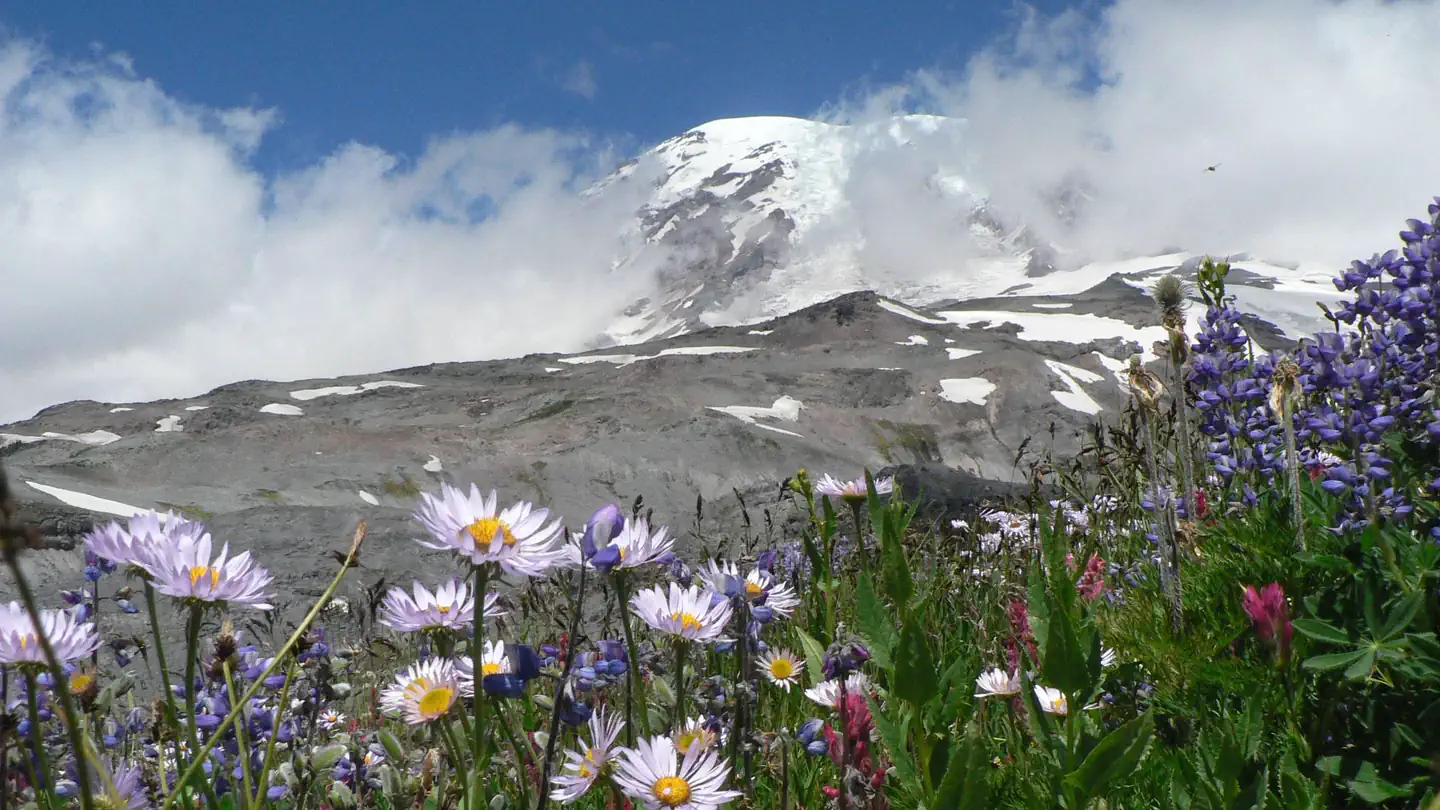
Ascending to 14,410 feet above sea level, Mount Rainier stands as an icon in the Washington landscape. An active volcano, Mount Rainier is the most glaciated peak in the contiguous U.S.A., spawning five major rivers. Subalpine wildflower meadows ring the icy volcano while ancient forest cloaks Mount Rainier’s lower slopes. Wildlife abounds in the park’s ecosystems.
In 1988, Congress designated 97% of Mount Rainier National Park as wilderness. This area is managed to preserve its wilderness character. Tens of thousands of visitors encounter the wilderness on overnight trips every year, whether through the challenge of a summit climb, the immersion of the Wonderland Trail, or the restorative peace of a shorter foray into the backcountry.
Only a few hours away from major population centers, the Mount Rainier Wilderness provides outstanding opportunities for solitude in a landscape largely unmodified by modern human manipulation and control.
Notifications and Alerts
Due to several active fires on the north side of the park, the following closures are in effect until further notice: Sunrise Road, Grand Park area & trails, Northern Loop Trail, Wonderland Trail from Carbon River Suspension Bridge to Frozen Lake, & associated backcountry camps. White River Road & WR Campground will reopen Sat 9/5 along with White River/Sunrise Trails. Sunrise Rd CLOSED to vehicles. For closure details, visit: Wildland Fire Information - Mount Rainier National Park (U.S. National Park Service)
Permit & Season Information
A permit is required year-round for all overnight stays in the backcountry. A wilderness permit allows the permit holder and their group to camp in a designated camp or area.
2/3 of wilderness permits are available for advance reservation for trips between the end of May (May 1 for climbing camps and zones) and the first federal holiday in October. Reservations must be made at least 2 days in advance of the trip start. The remaining 1/3 of permits are issued at ranger stations on a first-come, first-served basis. Sites/zones become available for reservations on April 25. See below for information on the Early Access Lottery.
Wilderness and Climbing permits outside of the reservation season are first-come, first-serve.
Off-season climbing permits are issued by self-registration at the Paradise Old Station.
Permits for the Paradise large group winter camps (13 or more people) can be reserved when consolidated snow depth at Paradise reaches 5 feet.
Visit Plan Your Visit for more information.
Need to Know
When planning your trip, please keep the following in mind:
Permits are required year round. For information about winter camping, please start here
Recreation.gov provides access to view availability and to secure reservations for permits. Pre-planning using the Wilderness Trip Planner , the Mount Rainier National Park website, and other trip planning resources such as guide books is strongly encouraged.
Travel above 10,000 feet or on glaciers requires a climbing special use permit and payment of the climbing fee. The climbing fee must be paid by every person on the climbing permit and must be paid for each climb (ie: if you climbed in May and you are climbing again in June, you must pay the climbing fee for the May climb and then again for the June climb). Climbing permits can be obtained in person at a Wilderness Information Center. A wilderness permit is still required, and reservations are encouraged for peak season.
Solo travel above high camps or anywhere on glaciers is not permitted except with prior written permission of the Superintendent. Submit a request for a solo permit.
Visitors interested in a complete Wonderland Trail itinerary or other high-demand camps during peak season are encouraged to participate in the Early-Access reservation lottery.
Because camping off itinerary can affect camping opportunities for others and damage natural resources, your itinerary must be achievable. For this reason, the maximum daily mileage between camps is limited to 17.5 trail miles on Recreation.gov. Trips with longer daily mileage can be obtained in person or reserved in advance by contacting the Wilderness Information Centers after the early access period ends.
It is possible to book reservations for areas that present life-threatening hazards and require specialized equipment and experience.
Non-stop itineraries that span two calendar days, such as ultra-running or single-push summit climbs, still require a permit for safety and visitor use management purposes.
In designated camps, all food, garbage, and scented items must be hung from a bear-pole or secured in an approved animal-resistant canister. Permit holders may borrow bear canisters for free at Wilderness Information Centers.
Bear Canisters are strongly recommended in cross-country and alpine areas where it is not possible to hang food 12 feet high and 10 feet out from a tree trunk.
Camping is only permitted in the camp area designated on your permit itinerary, on the date indicated.
Excluding Paradise winter group camps, the maximum party size is 5-12 depending on camp area, and affiliated groups must camp and travel at least one mile apart.
Stock are prohibited in most camp areas and trails. They are permitted on the Pacific Crest Trail and the Laughingwater Creek Trail.
Pets, weapons other than firearms, vehicles, bicycles and other wheeled devices are not permitted on park trails, meadows, or in any undeveloped area of the park.
The use of firearms is prohibited in the national park.
Parties of 6 or more must camp in designated group sites. Parties of 5 or less must not camp in group sites unless specifically indicated on their permit.
A park Entrance Fee is required for entry into the National Park. Pay your entry fee in person or online.
Leave No Trace
Please follow all principles of Leave No Trace including: Plan ahead and prepare, travel and camp on durable surfaces, dispose of waste properly, leave what you find, minimize campfire impacts, respect wildlife, and be considerate of other visitors.
For more information on planning your trip in the wilderness of Mount Rainier National Park, visit our Wilderness Trip Planner.
Fee Policy
Lottery Application/Permit Reservation Fee: Each early access lottery application or permit reservation is subject to a non-refundable $6.00 fee. If you are successful in the early access lottery, no additional permit reservation fee is due.
Note: The park also charges the $6 permit reservation fee for first-come, first-served permits issued in person. This fee supports the permit and reservation management system.
Recreation Fee: $12 per person, per night (starting with the February 2025 lottery). Youth 15 and under are free
Note: In January 2025, the park restructured wilderness recreation fees to directly fund staff and services that support backcountry use.
Entrance Fee: The park charges an entrance fee which you may pay upon arrival or purchase in advance. The park honors valid America the Beautiful-the National Parks and Federal Recreational Lands Passes (e.g. Senior, Military, 4th Grade, etc.) also known as interagency passes. Visit the park's Fees & Passes page for details.
Cancellation Policy
Cancellation Policy: You may cancel your reservation four or more full days before your reservation date and receive a refund. The $6 reservation fee is non-refundable.
Change Policy: You may make changes to your permit itinerary, if space is available, up until the day before your reservation date (additional fees may apply). Your start date cannot be changed without cancelling your permit and starting over. Once your permit has been issued, you cannot make changes to the permit unless approved by a ranger at a Wilderness Information Center.
One additional permit holder can be identified when the reservation is created. Otherwise, reservations and permits are non-transferrable.
Contact Information
Mailing Address
55210 238th Ave East Ashford WA 98304
Phone Number
360-569-6650